
GA Capital · Digital Infrastructure
Turkey Data Center MarketRegulated demand, improving interconnect
Regulated demand, improving connectivity and a concentrated operator base make power-secure, carrier-rich capacity the investable edge.
Need to Know
Facts first; consequences embedded below charts
Colocation revenue guided near ~20% CAGR through 2030; Istanbul primary hub; Ankara/İzmir emerging. Treat all MW/price claims as verified-only.
Multiple subsea landings (Marmaris/Istanbul) and DE-CIX Istanbul; AWS Direct Connect launched at Equinix IL4 in May 2025.
Installed capacity ~121.4 GW (Sep 2025); renewables rising. Climate workable with IEC/adiabatic; design for heatwaves; seismic design mandatory.
Executive Summary: House View
Thesis: Steady, regulated-led growth: not hyperscale-led (yet)
Attractive, steady-growth colo market with improving interconnect and rising regulated/hybrid demand; step-change requires incentives + cable diversity + anchor commitments.
Demand: ~20% CAGR through 2030 with finance/public + hybrid cloud
Banking on-shore rules anchor local hosting; KVKK cross-border tools ease multinational hybrid; e-commerce/media/gaming add latency-sensitive load.
Supply: ~110-130 MW installed; ~150+ MW pipeline (Ankara-weighted)
Istanbul remains interconnect center; Ankara pipeline includes Khazna (up to 100 MW) and Türksat (~21 MVA); İzmir adds Vodafone-EDGNEX program.
Connectivity & power: DX@IL4 + DE-CIX now; KARDESA & TR-EU backhaul next
Budget for tariff volatility with indexation/PPAs; interconnection timing at 154/380 kV is gating for RFS; market resilience improves with Black Sea route diversification.
Risk & design discipline
Climate workable with IEC/adiabatic; engineer for heatwaves; Istanbul↔Ankara active/DR for seismic diversity; keep IT MW vs facility MVA distinct; normalize program vs delivered MW.
Demand Drivers
What pulls capacity and where it goes
• Account pipeline and sector rules determine how these drivers translate into siting and product mix.
Connectivity & Landings
Cable landings, IX presence, and cloud on-ramps that shape siting
Subsea & Interconnection
- SEA-ME-WE-5: Marmaris (operator in TR: Türk Telekom)
- MedNautilus: Istanbul landing
- ITUR: Istanbul landing
- KAFOS: Istanbul-Varna-Mangalia (Black Sea)
- DE-CIX Istanbul (carrier- and DC-neutral exchange)
- AWS Direct Connect location at Equinix IL4 (10/100 Gbps, MACsec)
• SMW-5 lists Marmaris (Türkiye) as a landing (Türk Telekom member).
• MedNautilus and ITUR list Istanbul landings; KAFOS connects Istanbul-Varna-Mangalia (Black Sea).
• DE-CIX operates in Istanbul across multiple enabled sites; AWS Direct Connect opened at Equinix IL4 on 12 May 2025.
Upcoming route diversity (Black Sea)
Black Sea route diversity supports Istanbul/Ankara paths and Izmir adjacency; monitor execution and landing specifics for siting decisions.
• Vodafone announced the Kardesa Black Sea cable (Oct 20, 2025) with planned landings in Bulgaria, Türkiye, Georgia, and Ukraine; first landing targeted in 2027 (Bulgaria).
Power & Energy Context
Capacity, mix, and price context for budgeting
Capacity & Mix
Availability is improving and greening; grid interconnection timelines at 154/380 kV remain a siting critical path.
• Installed capacity reached ~121,418 MW by end-Sep 2025; 61.6% renewables capacity share.
• 2024 generation shares: coal 34.7%, gas 18.9%, hydro 21.1%, wind 10.4%, solar 8.7%, geothermal 3.1% (Ministry).
• Akkuyu NPP Unit-1 targets first power in 2025 (Reuters; officials).
Tariffs & Pricing (recent moves)
Budget with indexation/hedging; cross-check wholesale exposure in contracts vs retail supply. Consider on-site PV/PPAs where feasible.
• EPDK raised electricity tariffs effective 5 Apr 2025 (residential +25%; industrial +10%); BOTAS raised gas for industry (+20%) and power (+24.2%).
• Business retail benchmark ≈ $0.104/kWh (Mar 2025). Day-ahead wholesale PTF averaged ~2,070-2,520 TL/MWh across 2024-3Q24; FX drives USD/kWh conversion.
Climate & Cooling
Thermal design ranges and extreme-heat resilience
Operating envelope
Use IEC/adiabatic strategies with containment; expect higher summer PUE than Nordics; validate wet-bulb and water strategy (WUE) per site.
• Istanbul typical July highs ~28-30 °C; inland Ankara cooler/drier: increases free/partial-free cooling hours vs coast.
• Turkey set an all-time national record of 50.5 °C (Silopi) on 25 Jul 2025; engineer for heatwaves, not means.
Seismic & Siting Notes
Marmara exposure and code context
Seismic probability & code
Prioritize modern stock, soil data, and isolation options; Istanbul clusters carry elevated seismic hazard vs Ankara.
• USGS studies estimate ~40-60% probability of M≥7 event impacting Istanbul over 30 years (time-dependent models).
• Apply TBDY-2018 design and consider seismic isolation for critical facilities; parcel underwriting requires confirmed soil class and liquefaction exposure.
Seismic risk map (AFAD)
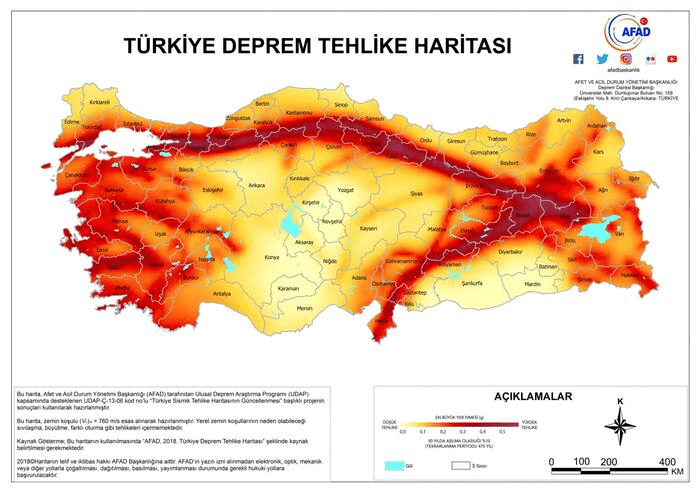
• AFAD national seismic hazard map: for siting context only; perform parcel-level geotech before decisions.
Regulatory Snapshot
KVKK cross-border tools; sectoral localization for banks
KVKK & Cross-Border Transfers (2024-25)
Practical: provide KVKK-aligned standard contract templates and BCR language in your onboarding to ease multinational diligence.
• Türkiye is not in the EU/EEA; GDPR does not apply by law. KVKK (Law No. 6698) governs personal data.
• Amendments and secondary rules in mid-2024 added GDPR-style transfer tools: adequacy decisions, standard contracts (SCC-like), and BCRs; 2025 guidance explains usage.
Banking (BRSA): On-shore Requirement
Play: target finance/public-sector and hybrid adjacency (DX@IL4 + DE-CIX). Offer Istanbul↔Ankara active/DR pairs for seismic diversity.
• BRSA rules require banks’ primary (and related outsourced/cloud) systems to be located in Türkiye. This materially anchors in-country demand.
Istanbul vs Athens vs Crete
Cable diversity, IX/cloud adjacency, incentives, risk
Side-by-side (qualitative)
| Place | Cable diversity (within ~100 km) | IX / Cloud adjacency | Incentives / Policy | Headline risks |
|---|---|---|---|---|
| Istanbul | ITUR, MedNautilus, KAFOS; backhaul to SMW-5 (Marmaris) | DE-CIX live; AWS Direct Connect (IL4) | KVKK tooling; sectoral (BRSA) demand; standard investment regime | Seismic (Marmara); tariff volatility; EU jurisdiction gap |
| Athens | Med systems to GR; BlueMed paths to EU backbones | Cloud regions announced (MS/Google); large campus scaling | Strategic investment fast-track; EU jurisdiction | Power siting queues; cost inflation |
| Crete | BlueMed landing; East-Med route diversity | Edge to Athens; hub narrative forming | National push to make Crete a hub | Early-stage; backhaul dependence to mainland |
• Greece has announced cloud regions (Microsoft/Google) and new East-Med landings (BlueMed in Crete); Türkiye offers strong interconnect (DE-CIX, DX@IL4) and evolving Black Sea diversity (KARDESA).
İzmir: Quick Diligence
Anchor colos vs boutique hosters
Operators and status
| Operator | Status | Published scale | Notes | Sources |
|---|---|---|---|---|
| Turkcell İzmir (Menderes/İTOB OSB) | Live | Purpose-built Tier III; building ~14,500 m²; ~2,400 m² white space (press); MW N/A public | National-scale telco DC; credible anchor in İzmir metro; verify current IT MW and interconnection details. | DCD: Turkcell launches İzmir DC |
| Vodafone Türkiye + EDGNEX (DAMAC): İzmir | Announced | Program ~$100m; up to 6 MW (long-term projection); phase-1 target Q1 2025 | Treat $/MW as program-level until delivered IT MW at COD disclosed; verify RFS status now. | Invest in Türkiye: announcement |
| Local hosting/ISP facilities (aggregated) | Live | Boutique/DC rooms; public MW typically not disclosed | Examples include PlusLayer, Alastyr, Inetmar, Netdirekt, Cenuta, Sağlayıcı, Websahibi, Hostegon. Treat as hosters/edge, not national-scale neutral colos. | Data Center Map: İzmir listings |
• Boutique hosters establish commercial presence but do not prove multi-MW neutral colocation; underwriting still requires confirmed MW and certifications.
Operators & Documented Capacity
Documented public figures (IT MW / white space)
| Operator | Metro | Site/Campus | Installed (IT MW) | Published Capacity | Status | Sources |
|---|---|---|---|---|---|---|
| Equinix: IL2 | Istanbul (Ümraniye, Dudullu OSB) | IL2 | , | 12,000 m² white space | Live | Equinix: acquires Istanbul DC from Zenium (2017), DCD: Equinix acquires Zenium Istanbul One (2017), Equinix: IL2 Istanbul IBX |
| Equinix: IL4 | Istanbul (Ümraniye, Dudullu OSB) | IL4 | , | , | Live | Equinix: IL4 Istanbul IBX, DE-CIX: Istanbul |
| NGN: Star of Bosphorus | Istanbul (Pendik) | , | , | 16.0 MW IT | Live | NGN: Star of Bosphorus Data Center |
| Radore | Istanbul (Levent, MetroCity) | , | , | 3.9 MW IT | Live | Radore: Data Center |
| Telehouse Istanbul (KDDI/Teknotel) | Istanbul (Kozyatağı) | , | , | , | Live | Telehouse Istanbul (KDDI/Teknotel) |
| Türk Telekom | Istanbul (Esenyurt, Gayrettepe) + Ankara (Ümitköy) | , | , | 12,700 m² white space | Live | Telehouse Istanbul (KDDI/Teknotel) |
| Turkcell (fleet) | Gebze, Ankara, İzmir, Tekirdağ | , | 33.0 MW IT | 54.0 MW IT | Live | Turkcell: Investor Presentation (Jan 2025) |
| KoçSistem | Istanbul | , | , | 3.3 MW IT | Live | Untes: KoçSistem Data Center (Istanbul) |
• Totals reflect published figures; treat values as indicative until verified via primary filings or operator pages.
• Avoid mixing facility MVA with IT MW; per-rack specs are not directly comparable to sitewide MW.
Installed / published capacity (indicative)
• Only Turkcell reflects installed IT MW (33) from the Jan 2025 investor deck; other values are operator-published site figures and may reflect facility or total capacity: treat as indicative / under review.
Pipeline & Announcements
Staged capacity and program capex (not delivered IT MW unless stated). Tip: do not mix facility MVA with IT MW; label program totals separately from delivered first-phase MW at COD.
Notable Program
| Sponsor/Operator | City | Stage | Capacity | Program Capex | Target COD |
|---|---|---|---|---|---|
| Vodafone Türkiye / EDGNEX (DAMAC): 50/50 JV | İzmir (Aegean Region) | Announced | Up to 6 MW (program) | $100m | Q1 2025 |
| Khazna Data Centers | Ankara (Başkent OIZ) | Announced | Up to 100 MW (program) | , | , |
| Türksat | Ankara (near Gölbaşı) | Announced | 21 MVA facility power (initial phase); IT MW TBD | , | H1 2027 (target launch) |
• Implied capex intensity ≈ $16.7M per future MW assuming full 6 MW build; initial delivered MW at COD not disclosed.
• Do not compare program $/MW to realized IT MW benchmarks; harmonize on the same definition before comparison.
Pipeline / program totals (MW)
• Values shown as announced program totals. Türksat figure is facility MVA; Vod-EDGNEX is ‘up to’ program MW; Khazna up to 100 MW. Not directly comparable to delivered IT MW at COD.
DC-Relevant Incentives (Peer Snapshot)
What operators can actually bank on
Türkiye: Priority Investments & PBIS/HIT-30
- Eligibility: ≥ 3 MW installed power; cloud DC spend ≥ TRY 200m
- Supports: VAT/customs exemption; tax reduction; social security; interest support; land allocation
- PBIS/HIT-30: decree-driven add-ons (cashback, energy, capital contribution, etc.)
• Data centers are named Priority Investments with ≥ 3 MW installed power; cloud providers qualify with ≥ TRY 200m DC spend.
• Toolbox: VAT & customs exemption; tax reduction; social-security support; interest/profit-share support (capped); land allocation. PBIS/HIT-30 can add cashback, energy support, capital contribution.
Greece: Fast-Track & Development Law
- Fast-track licensing (many permits ~45 days)
- Tax stabilization (up to 12y), accelerated depreciation, possible grants
• Fast-track licensing windows; tax-rate stabilization up to 12 years; accelerated depreciation; potential subsidies; strategic spatial planning tools.
Thailand: BOI (updated 2025)
- Up to 8-year CIT holiday (no cap) for qualifying DCs
- Import duty exemptions; BOI one-stop facilitation
• Up to 8-year CIT exemption; import duty exemptions; 2025 updates add efficiency criteria and strategic packages.
Vietnam: Decision 29 & Telecom Law
- CIT 9%/30y; 7%/33y; 5%/37y (with exemptions/reductions)
- Land/water rent relief; large qualifying projects
• Special investment incentives grant deep, long-tenor CIT holidays with exemptions/reductions; Telecom Law 2023 formalizes “data center services”.
Spain: national + regional mix
- National R&D/innovation credits; regional land/grid facilitation
• No single national DC holiday; operators combine national R&D credits/loans with regional facilitation and RES PPAs; grid investment rules evolving.
Peer Comparisons (Indicative)
Installed vs pipeline, on-ramps, cables, power, regulation
Regional peers (qualitative only)
| Market | Installed (indicative) | Pipeline (indicative) | On-ramps / Regions | Cables | Power Notes | Regulation |
|---|---|---|---|---|---|---|
| Türkiye | ≈110-130 MW documented colos (indicative) | ≈150 MW+ (Ankara-heavy; Türksat/Khazna; Vodafone-EDGNEX İzmir) | AWS Direct Connect (IL4); DE-CIX Istanbul; no hyperscaler region | SMW-5 (Marmaris), ITUR, KAFOS, MedNautilus; KARDESA (Black Sea, 2027 target) | Tariff hikes Apr 2025; greening mix; interconnection timing key | Sectoral strict (finance) + KVKK transfers; broad consumer internet not blanket-localized |
| Romania | Carrier hotels single-digit MW per site (e.g., NXDATA-3 ~5 MW total/3 MW IT) | HPC campus planned up to 200 MW (ClusterPower, Dolj) | No hyperscaler region; strong carrier-neutral presence (Bucharest) | Terrestrial to EU backbones; Black Sea routes via RO-BG; no major new subsea hub | Competitive power/PPAs vs Med; EU jurisdiction | EU GDPR; localization via sector or contractual needs |
| Bulgaria | Telepoint Sofia East ~9 MW; Neterra SDC2 ~2 MW (others 1-2 MW) | Incremental; retail/edge focus | No cloud region; Sofia carrier hotels active | Terrestrial to EU; Black Sea paths via BG-TR-RO | Competitive pricing; EU jurisdiction | EU GDPR |
| Serbia | Identified ~12 MW; ~6 MW live (Q4-2023) | Small builds; selective wholesale | No region; limited on-ramps; cross-border adjacency | Terrestrial corridors; no subsea landings | Cost-sensitive; check reliability hedges | Not EU; adequacy/transfer frameworks apply |
| Morocco | N+ONE Casablanca DC-II ~4 MW; base small but growing | Announcements up to 500 MW (Dakhla): treat as high-risk until shovel-ready | No region; emerging carrier-neutral sites | Atlantic/Mediterranean routes; proximity to Iberia | RE growth; policy-driven frameworks | Targeted localization for critical sectors |
| Thailand | ≈100-120 MW+ colos (indicative); large campuses in pipeline | 650 MW+ cited across Bangkok projects (indicative) | AWS Region GA (Jan 2025); other cloud regions announced | Multiple SEA cables via Thailand/Malaysia; terrestrial routes to SG/MY | BOI approvals; grid additions; price trends vary by tariff class | PDPA (since 2022); cross-border transfer tools (adequacy/SCC-like/BCR) |
Sources
- Invest in Türkiye: Vodafone & DAMAC announce İzmir DC
- Daily Sabah: $100m DC in Türkiye (media)
- AWS: Direct Connect Istanbul
- DE-CIX Istanbul (official)
- Energy Ministry: Electricity (mix & capacity)
- Hürriyet Daily News: 121.4 GW (Ministry)
- Reuters: Apr 2025 tariff hikes
- GlobalPetrolPrices: business retail
- Weather-Atlas: Istanbul climate
- DW: 50.5 °C national record
- USGS: Istanbul seismic probability (2000; 2016)
- USGS: Marmara probability (JGR 2016)