
GA Capital · Energy & Geopolitics
Gulf EnergyHormuz Risk Meets Market Pulse
Not every Middle East headline is an investment signal. The useful question is which Gulf chokepoint and infrastructure shocks move into crude, freight, and product markets — and how quickly that happens.
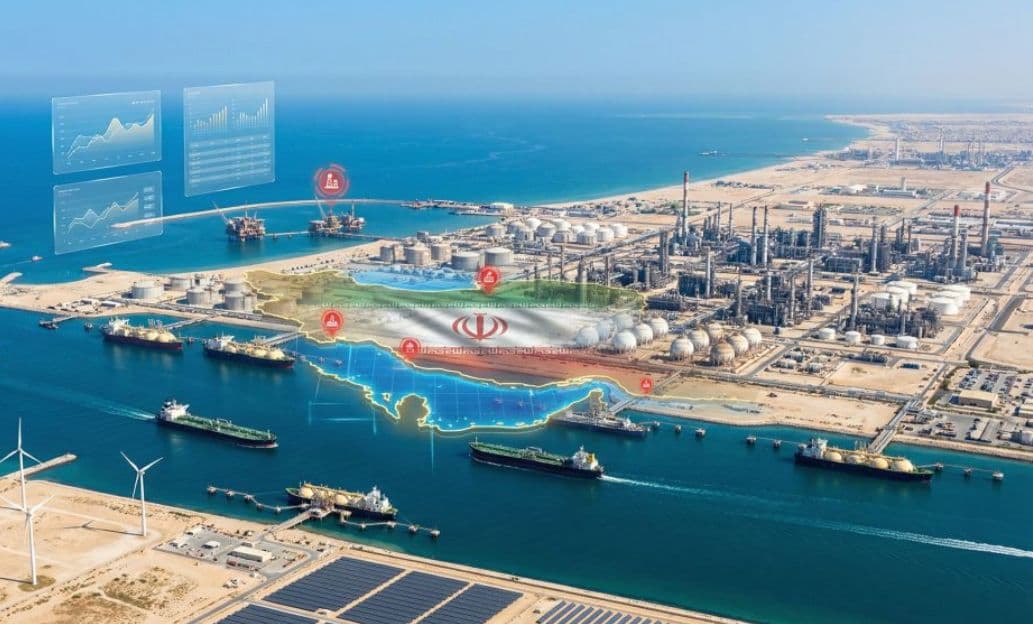
Hormuz Concentration Sets the Gulf Energy Risk Map
About one-fifth of global oil demand still moves through a single maritime choke. Freight rates, tanker counts, and crude prices are the practical dashboard for underwriting that concentration.
In a typical year, about one-fifth of global oil consumption — roughly 21 million barrels per day — moves through the Strait of Hormuz.
Freight rates, tanker counts, and crude prices answer the same question: how quickly Gulf disruption shows up in energy markets.
Read the curated briefing alongside live commodity, shipping, and Hormuz exhibits to separate energy-relevant stress from ambient geopolitics.
Chokepoint Stress Clears Into Price Before Headlines Settle
Underwriting starts at the nodes that actually move barrels and LNG. From there, the question is which market markers and transit pulses confirm that stress is becoming real.
Gulf energy risk is not the same as every Middle East headline. It concentrates at a small set of maritime and processing nodes — including Hormuz, Fujairah, Ras Tanura, Kharg, and Abqaiq — where interruption can reprice crude, freight, and downstream products within days.
This report treats that concentration as an underwriting problem. It asks which market markers move first, which shipping and trade pulses confirm physical stress, and which intelligence items map onto energy infrastructure rather than ambient geopolitical noise.
The live exhibits draw on the same Gulf intelligence registry used for operational monitoring: commodity history, Arabian Gulf freight rates, Hormuz transit snapshots, and EIA petroleum trade. They are presented here as an Insights narrative for investment professionals, not as a newspaper or chat product.
Curated Briefing Filters Ambient Conflict From Energy Signal
This feed keeps market-move, supply-chain, analysis, and research items that map onto Gulf energy vocabulary. It is filtered for relevance, not a dump of the full raw news stream.
Loading live briefing…
Crude and Product Markers Price the Stress Curve
These charts show recent Brent, WTI, product, and gas prices from the Gulf intelligence registry. When a chokepoint shock starts to matter for underwriting, it usually appears here first as investable price action.
Loading market markers…
Freight, Hormuz Transit, and Trade Confirm Physical Stress
Arabian Gulf tanker Worldscale rates, Hormuz vessel snapshots, and US petroleum trade readings sit one layer below price. Together they help confirm whether stress is physical, rather than only narrative.
Loading shipping pulse…
Read Markers First, Then Confirm With Transit and Briefing
Close the report with a simple sequence. Read prices first, then check physical transit pulses, then use the curated briefing. Geopolitical headlines without those confirmations should stay noise.
Brent, WTI, product, and gas prices from the Gulf commodity history form the primary map. These are the densest and highest-confidence continuous series in the live exhibits.
Arabian Gulf VLCC, Suezmax, and Aframax freight snapshots, together with Hormuz vessel counts, show whether stress is becoming physical. Coverage is thinner than prices and should be read as a pulse check, not a full AIS feed.
Market-move, supply-chain, analysis, and research items are filtered for Gulf energy relevance. Raw news volume is large and noisy, so the briefing is directional rather than exhaustive.
Start with Tier 1 markers. If Brent, WTI, and products are not moving, treat headline conflict as ambient until freight rates or Hormuz counts confirm physical stress.
Use Tier 2 as confirmation rather than a standalone tracking system. A thin Hormuz snapshot still matters when it lines up with a freight spike or a crude break.
Treat the briefing as a filter, not a newspaper. Prefer items that name chokepoints, terminals, freight, crude, or LNG over broad geopolitical coverage.
- EIA: The Strait of Hormuz is the world’s most important oil transit chokepoint
- IEA: Oil Market Report — June 2026
- CSIS: CSIS analysis library — Middle East energy and security